How the NFL Devalues Its Running Backs
The National Football League has a troubling tendency to treat running backs as disposable assets, and the franchise tag exposes the hierarchy. Per the tag rules, a player is bound to his team for a single season at a salary averaged from the top five earners at his position, with long-term extensions permitted only up until the mid-July deadline. Running backs aren’t replaceable. Bad ones are. Great ones? They change everything: “CBS Sports” The dollar gaps tell the story. Per CBS Sports, the 2023 running back tag was worth just $10.091 million, the lowest figure of any offensive or defensive skill position, while the quarterback tag sat at $32.4 million. The running back tag actually fell from $12.1 million in 2017 to $10.1 million in 2023, while every other position group climbed over the same six years. 
The Threat That Keeps Defenses Honest
While passing games garner most of the attention, a potent rushing attack is crucial for offensive success. The threat of a dominant running back forces defenses to respect the ground game, creating opportunities for play-action passes and keeping them honest. Without this balance, offenses become one-dimensional and predictable, making them easier to defend against. Durability compounds the discount. Per Deadspin, the average running back lasts roughly 2.57 years, the shortest career of any position, with production usually fading after age 28. Teams treat that short shelf life as a reason to spend elsewhere. The 2023 offseason made the squeeze concrete. Per CBS Sports, three Pro Bowl backs—Saquon Barkley, Josh Jacobs, and Tony Pollard—were all franchise-tagged, and none landed a multi-year extension before the July 17 deadline. 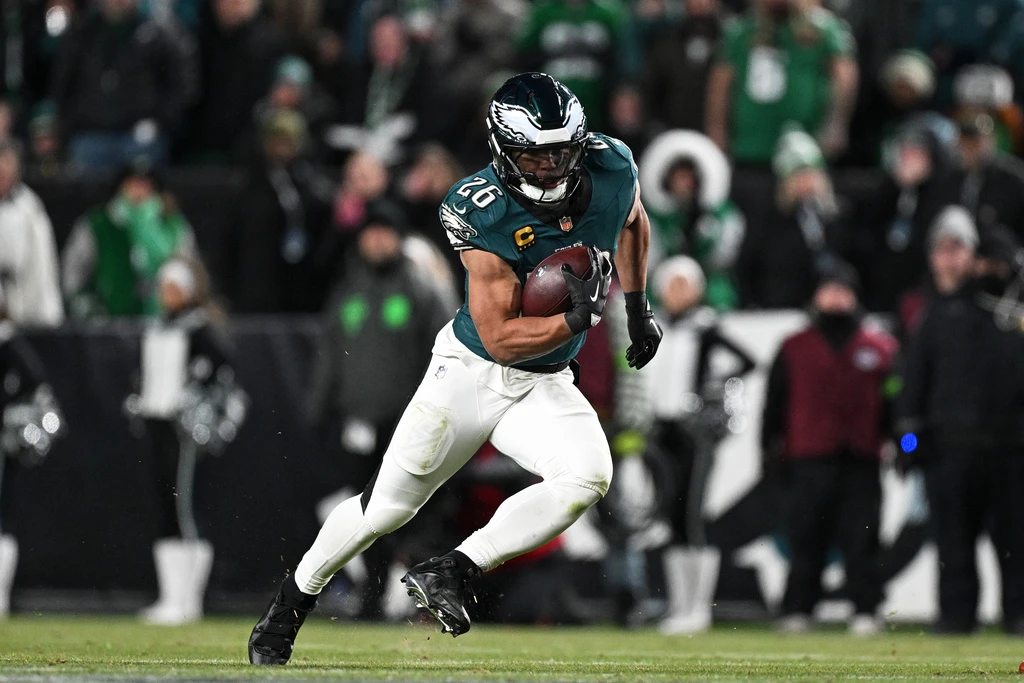
The RB Summit: When the Stars Pushed Back
The stars refused to stay quiet. In July 2023, per ESPN, Chargers back Austin Ekeler organized a Zoom call of the league’s top runners, including Barkley, Jacobs, Christian McCaffrey, Derrick Henry, and Nick Chubb. They aired grievances about a depressed market and brainstormed ways to lift their value. The frustration spilled into public view. McCaffrey posted on X that the situation was “criminal,” calling the tagged trio “three of the best PLAYERS in the entire league, regardless of position,” per CBS Sports. Aaron Jones was just as blunt to the same outlet: “I really don’t understand how the position got devalued… running backs make a big difference in the game.” This lack of loyalty and appreciation for their contributions is a disservice to the players and the game itself. In 2024, Barkley led the NFL with 2,005 rushing yards, becoming the ninth player in league history to clear 2,000. He did it on 5.8 yards per carry with 13 touchdowns and a league-leading 345 carries.
The Proof on the Field: Barkley and McCaffrey
Winning championships in the NFL requires offensive balance, and elite running backs are a crucial component of that equation. While bad running backs may be replaceable, truly great ones elevate the entire offense to new heights. Their ability to control the clock, wear down defenses, and open up the passing game is invaluable. In Super Bowl LIX, per Fox Sports, the Eagles beat the Chiefs 40-22, and Barkley pushed his combined regular-season and playoff total to an all-time NFL record 2,504 yards. The Chiefs loaded seven or more defenders in the box on 38 plays, their second-most in any 2024 game, to smother Barkley. Barkley told ESPN it was “pick your poison.” Kansas City largely stopped him on the ground, yet the Eagles still cruised to a 40-22 win. The threat of the back created the openings elsewhere. 
What’s Next for the Position
The market has started to answer. Per Over The Cap, the Eagles added two years and $41.2 million in new money to Barkley’s deal in March 2025, with $36 million guaranteed, making him the highest-paid running back in NFL history. McCaffrey had reset the position at $19 million per year in 2024, and CBS Sports reported that the 2024 free-agent market blew past recent years, with Josh Jacobs landing a four-year, $48 million deal in Green Bay. Yet the structural debate is unresolved. Fox Sports and CBS Sports still frame running back as one of the league’s most replaceable jobs, citing short shelf lives and cheap draft-day replacements. One prominent agent told Sports Illustrated the opposite—that certain backs are viewed “more than they are running backs,” as true difference-makers. Barkley’s season is the strongest evidence yet for that view. The economics, for now, still have not changed for most of the position.