
In a season that defied all conventions, Shohei Ohtani etched his name into the annals of baseball immortality, achieving feats that were once deemed impossible.
Shohei Ohtani’s 2025 season with the Los Angeles Dodgers didn’t just defy convention — it dismantled the statistical vocabulary baseball has used for more than a century. No player in the modern era has produced at an elite level on both sides of the ball simultaneously, and Ohtani didn’t just meet that standard. He raised it.


The numbers Ohtani posted in 2025 would have made him a legitimate MVP candidate as a hitter alone. As a pitcher alone, his return from a second Tommy John surgery would have been a compelling comeback story. The fact that he did both — in the same season, for the defending World Series champions, in the largest media market in the country — is what separates him from every player who came before him.
Ohtani is doing something no player in baseball history has done before, and he’s doing it at the highest level, in the biggest market, on the biggest stage. That’s not hyperbole — it’s the straightforward conclusion of anyone who has watched him play and looked at the numbers behind what they’re seeing.
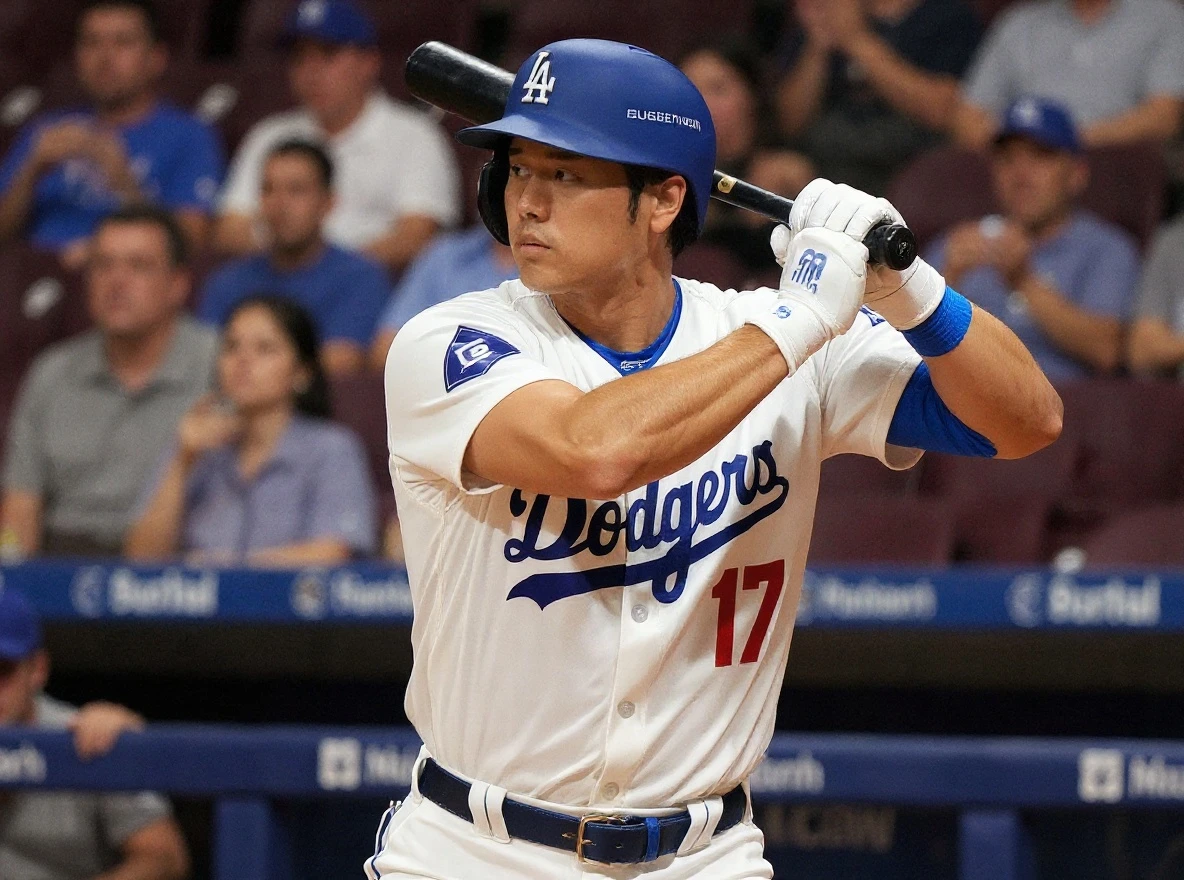
His 2025 season with the Los Angeles Dodgers produced numbers that would be remarkable for a full-time hitter or a full-time pitcher. As a designated hitter and starting pitcher operating in the same rotation cycle, Ohtani delivered one of the most complete two-way seasons in the sport’s recorded history.
Defying the Odds: Ohtani’s Remarkable Two-Way Dominance
Ohtani is both hitter and pitcher, and that combination has forced the sport to reckon with a talent it has no historical framework to evaluate. Traditional WAR models, MVP voting criteria, and even the way broadcasters describe player value were all built around the assumption that elite players specialize. Ohtani has made that assumption obsolete.
Ohtani’s 2025 campaign ended with his fourth career MVP award — and his second consecutive with the Dodgers — making him the first player in MLB history to win the award in both the American and National Leagues. That distinction alone would be a career-defining achievement for most players. For Ohtani, it’s one line in a growing list of firsts.
As MLB.com’s breakdown of his MVP history noted, he claimed AL MVP honors with the Angels in 2021 and 2023 before winning back-to-back NL MVP awards with Los Angeles in 2024 and 2025. No player in the award’s history had previously won it in both leagues, let alone four times total before turning 31.
Speaking through an interpreter after the 2025 award was announced, Ohtani kept his focus squarely on the team: “The biggest thing is obviously being able to win the World Series. That’s first and foremost. It’s icing on the cake just to be able to get an individual award, being crowned MVP, but I just really appreciate the support from all my teammates, everybody around me, my supporting staff.”
The Ultimate Prize: Ohtani’s Quest for World Series Glory
That framing — championship first, individual honors second — has defined his entire tenure in Los Angeles and reflects the competitive culture the Dodgers have built around him. Ohtani didn’t sign a $700 million contract to collect hardware. He signed it to win, and the results have validated that priority.
The statistical case for Ohtani’s 2025 MVP was overwhelming. At the plate, he led the National League with a 1.014 OPS and a 179 OPS+, both career highs, while launching 55 home runs — trailing only Kyle Schwarber’s league-leading 56. His ability to post those power numbers while maintaining elite on-base skills is what separates him from one-dimensional sluggers. A 179 OPS+ means he was 79 percent better than the league-average hitter — a margin that ranks among the best single-season offensive performances of the past two decades.
His 146 runs scored topped all of Major League Baseball and set a new franchise record for the Dodgers in the modern era. On the mound, Ohtani’s return from his second Tommy John surgery was measured but effective: 14 starts, 47 innings, a 2.87 ERA, 145 ERA+, 62 strikeouts, and just 9 walks. A 145 ERA+ means he was 45 percent better than the league-average pitcher across those outings — a figure that would make him a legitimate Cy Young contender if he had pitched enough innings to qualify.
Uncharted Territory: Ohtani’s Unprecedented Dual MVP Reign
The combination of those two statistical lines — elite hitter, above-average starting pitcher — produced a 9.4 WAR by FanGraphs and 7.7 WAR by Baseball Reference, ranking him second and third in all of baseball, respectively. The gap between the two models reflects the ongoing methodological debate about how to credit two-way contributions, but both systems agree on the core conclusion: Ohtani was one of the two or three most valuable players in the sport in 2025.
The 2024 postseason delivered the moment Ohtani had been building toward since arriving in the majors in 2018. Six seasons in Anaheim produced three MVP awards and a Cy Young-caliber pitching campaign, but no playoff appearances. The Dodgers changed that immediately.
He made his playoff debut in October 2024, delivering a game-tying three-run home run in Game 1 of the NLDS — a statement swing that announced his arrival on the postseason stage and silenced any lingering questions about how his game would translate in October.
The Dodgers advanced through the bracket to reach the World Series, where, as Sports Illustrated recapped, they defeated the New York Yankees in five games. Ohtani played through a shoulder injury sustained during the series, and when the final out was recorded, he had his first World Series ring — the one accomplishment his individual statistics had never been able to deliver in Anaheim.
The Making of a Legend: Inside Ohtani’s Remarkable Journey
For a player who had spent six seasons in Anaheim without reaching the playoffs, the 2024 title carried enormous weight. It answered the one question that had followed him throughout his Angels tenure: could he perform when the games actually mattered? The answer, delivered in the form of a three-run home run in Game 1, was definitive.
Ohtani’s broader statistical footprint continues to challenge how analysts and voters think about player value. The standard tools the sport uses to measure greatness — WAR, OPS+, ERA+ — were designed for players who do one thing exceptionally well. Ohtani does two things exceptionally well, and the models have struggled to keep up.
In 2024, while still rehabbing from elbow surgery and serving exclusively as a designated hitter, he became, as ESPN noted, the first full-time DH in MLB history to win an MVP award — a result that sparked genuine debate about how two-way contributions should be weighted in future voting. The argument from skeptics was that a player who doesn’t pitch shouldn’t win MVP. The counter-argument, supported by his .310 batting average, 44 home runs, and 1.036 OPS that season, was that the bat alone was worth it.
His 2025 return to pitching only strengthened the argument that he belongs in a category of his own. The combination of his hitting production and his pitching effectiveness — even in a limited workload — produced a two-way value profile that no other player in the sport could approach.
No player across the four major North American professional sports leagues — NFL, NBA, MLB, or NHL — had previously won an MVP award and a championship in each of their first two seasons with a new franchise before Ohtani accomplished it with the Dodgers. That cross-sport comparison underscores just how unusual his trajectory has been since leaving Anaheim.
What makes Ohtani’s case historically unusual is the absence of a meaningful comparable. Every other player in baseball history who is discussed in the same breath — Ruth, Mays, Bonds, Trout — can be evaluated against peers from their own era. Ohtani has no peers in his era, and no clear historical precedent from any other era.
Analysts who cover the sport daily have noted that standard WAR models were not built to fully capture two-way value, and the ongoing debate about how to properly credit his pitching contributions alongside his hitting production reflects a genuine methodological gap in how the sport measures greatness. This isn’t a minor statistical footnote — it’s a structural problem that Ohtani’s existence has exposed.
FanGraphs and Baseball Reference have both acknowledged the challenge of applying traditional frameworks to a player who contributes at an elite level in two completely separate skill sets. The two models produce different WAR totals for Ohtani in part because they weight his pitching and hitting contributions differently — a disagreement that reflects the broader uncertainty about how to value what he does.
Looking ahead, the most compelling question surrounding Ohtani is durability. He has now undergone two Tommy John surgeries, and the long-term wear of pitching and hitting at high volume across a full season remains an open variable. No player has sustained a two-way workload at this level deep into their 30s, because no player has ever attempted it at this level.
The Dodgers have managed his workload carefully — limiting him to 14 starts in 2025 as he rebuilt arm strength following his second elbow reconstruction — but the expectation is that his pitch count and inning totals will increase in 2026 and beyond. The organization’s medical and performance staff will play a significant role in determining how aggressively they push that timeline.
Whether you accept that conclusion or not, the fact that it’s being asked seriously — not hyperbolically, not as a hot take, but as a genuine analytical question by people who cover the sport for a living — tells you something definitive about where Ohtani stands in baseball right now. He has not just rewritten records. He has rewritten the question of what a baseball player can be.

What Fans Are Saying About Shohei Ohtani: Baseball’s Superhero
If Ohtani can sustain his current production level through his mid-30s, the historical argument becomes nearly impossible to contest. The next three to four seasons will define whether his legacy is that of the greatest player of his generation or something larger than that entirely. He is 30 years old, under contract through 2034, and has shown no signs of physical decline. The runway is long.
Ohtani’s path to this point required clearing obstacles that would have ended most careers. As FOX Sports documented, he underwent his first Tommy John surgery in September 2018, returned to pitch and hit at an elite level across the following five seasons, then required a second procedure in September 2023 — this time while already under the terms of his record-breaking 10-year, $700 million contract with Los Angeles. The timing meant he entered his Dodgers tenure unable to pitch, a fact that made his 2024 DH-only MVP season all the more remarkable.
As ESPN reported, the Dodgers structured the deal with $680 million of the total deferred, a financial arrangement that drew as much scrutiny as the headline number itself. The structure allowed Los Angeles to maintain payroll flexibility while locking in the most valuable player in the sport — a calculated bet that has already paid off in the form of two World Series appearances and one championship in Ohtani’s first two seasons.
Through two major elbow surgeries, a shoulder injury sustained during the 2024 World Series, and the sustained pressure of being the most expensive player in professional sports history, Ohtani has not just survived — he has produced at a level that makes the contract look not just defensible but potentially undervalued. A $700 million deal for a player who wins MVP awards and World Series rings in back-to-back seasons is, by any reasonable measure, a bargain for the Dodgers.
Fan reaction to Ohtani’s 2025 season has been intense and largely unified around one theme: this is something the sport has never seen before. Across social media platforms and fan forums, the dominant sentiment is that Ohtani has moved beyond conventional baseball comparisons. The conversation has shifted from evaluating him against his contemporaries to asking whether any historical comparison is even appropriate.
Ohtani’s physical profile — 6-foot-4, 210 pounds, a pitcher who works in the upper 90s and a hitter who generates elite exit velocities — reads more like a fictional creation than a real athlete. The debate about where he ranks historically is ongoing, but the consensus among fans and analysts alike is that the conversation has already shifted from “is he great?” to “how great is he, exactly, and does the sport have the vocabulary to answer that question?”
Not every fan approaches Ohtani’s dominance without reservation. The most common friction point is a straightforward one: team allegiance. Fans of NL West rivals — the Padres, Giants, and Diamondbacks — have watched him dismantle their pitching staffs for two consecutive seasons. It’s a reaction that surfaces regularly in fan discussions and reflects something real about how individual brilliance lands differently depending on which jersey it comes in.
For fans of NL West rivals or teams that have faced the Dodgers in October, Ohtani’s excellence is something to be respected and resented simultaneously. That’s the specific kind of greatness that defines a generation — the kind that forces opposing fans to acknowledge what they’re watching even when they’d rather not.
That tension doesn’t diminish what he’s doing — it actually reinforces it. Players who generate that kind of grudging acknowledgment from opposing fan bases are, almost by definition, the ones who matter most. Ohtani has earned that status in both leagues, which is itself a historical first.
The GOAT debate in baseball has traditionally centered on Babe Ruth, Willie Mays, and a handful of others whose careers spanned different eras and contexts. Ohtani’s emergence has complicated that conversation in a specific and irreversible way: he is doing something none of those players did. Ruth pitched and hit, but not simultaneously at an elite level across a sustained career in the modern game, against modern pitching, under modern training and medical demands.
Ruth pitched and hit, but not simultaneously at an elite level across a full career in the modern game. Ohtani is 30 years old, has two World Series rings, four MVP awards, and is operating under a contract that runs through 2034. The historical argument for his place among the all-time greats is already strong. The argument that he could surpass them entirely depends on what the next nine years look like.